
Rome is one of the most important cities in the Christian world, but its religious sites are also cultural, artistic, and historical landmarks of global significance.
You don’t need to be Catholic — or religious at all — to appreciate the scale, beauty, and influence of Rome’s holy places. Many of them are masterpieces of architecture, art, and urban planning, layered with nearly two thousand years of history.
Below are some of the most important holy sites in Rome, chosen not just for their religious meaning, but for what they offer visitors in terms of experience, context, and accessibility.
St Peter’s Basilica (Vatican City)
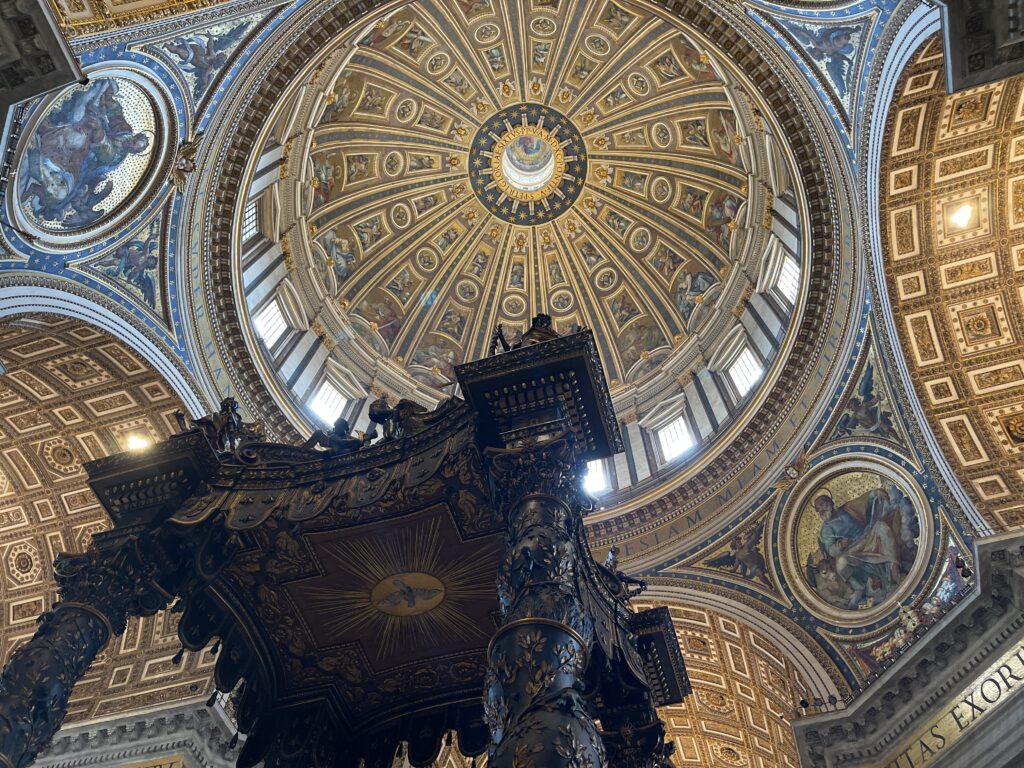
St Peter’s Basilica is the largest church in the world and one of the most extraordinary buildings ever constructed.
Built over the tomb of Saint Peter, the basilica represents centuries of ambition, faith, and artistic achievement. Inside, you’ll find works by Michelangelo, Bernini, and Raphael, along with vast open space that gives a real sense of scale and grandeur.
Even for first-time visitors to Rome, St Peter’s is often the single most memorable interior they see.
Timing matters here — early morning or late afternoon visits tend to be calmer and more rewarding.
Basilica of St Mary Major
St Mary Major is one of Rome’s four papal basilicas and one of the oldest churches dedicated to the Virgin Mary.
Unlike many churches in Rome, it has retained much of its early Christian structure, with beautiful mosaics dating back to the 5th century. It feels less overwhelming than St Peter’s, but deeply atmospheric and historically rich.
Its location near Termini makes it easy to include without major detours, and it’s often less crowded than other major basilicas.
Basilica of the Holy Cross in Jerusalem
This basilica is traditionally associated with relics brought to Rome from Jerusalem by Saint Helena, mother of Emperor Constantine.
It’s quieter, more contemplative, and far less visited than Rome’s headline sites, which makes it especially appealing for visitors interested in early Christianity and the city beyond the standard tourist route.
The church’s layered history — from imperial residence to sacred space — offers strong historical context when explored with explanation.
Basilica of Saint John Lateran
Saint John Lateran is officially the cathedral of Rome and the seat of the Pope as Bishop of Rome.
Despite this status, it’s often overlooked by visitors who focus on the Vatican. Architecturally, it’s monumental, with a vast interior and powerful presence, yet far less crowded than St Peter’s.
Adjacent to the basilica, the Lateran complex includes the Holy Stairs and historic cloisters, making this area one of the most important — and underappreciated — religious zones in the city.
The Seven Pilgrim Churches (Optional Context)
For centuries, pilgrims to Rome followed a traditional route linking seven major churches across the city.
While most visitors won’t complete the full route, understanding it helps place Rome’s holy sites within a broader spiritual and urban framework. Many of the churches listed above are part of this historic pilgrimage tradition.
Visiting Rome’s Holy Places Thoughtfully
Rome’s churches are living religious spaces, not museums.
Dress codes, behaviour, and timing all matter — not just out of respect, but to ensure a smoother visit. Security checks are standard at major sites, and queues can vary dramatically depending on the time of day and season.
A well-planned visit often makes the difference between feeling rushed and truly appreciating what you’re seeing.
Final Thoughts
Rome’s holy places are not all the same — some impress through scale, others through silence, age, or artistic detail.
Choosing which ones to visit (and how many) depends on your interests, energy levels, and the time you have available. Done well, they provide some of the most meaningful experiences the city has to offer.
If you’d like help planning a route, understanding what’s realistic to see in one day, or placing these sites into historical context, we’re always happy to advise.